
( CULTURAL BRIEFING NO 12 )
Transit cards, and what they tell you about the country
_EN
Know what’s amazing about transit IC cards across East Asia compared to Singapore? They rarely expire. And not just that — they physically last.
To be clear, I’m comparing between the Kanto region’s Suica/Passmo, Kansai region’s Icoca, South Korea’s T-money, Hong Kong’s Octopus, Taiwan’s EasyCard, and Singapore’s EZ-Link.
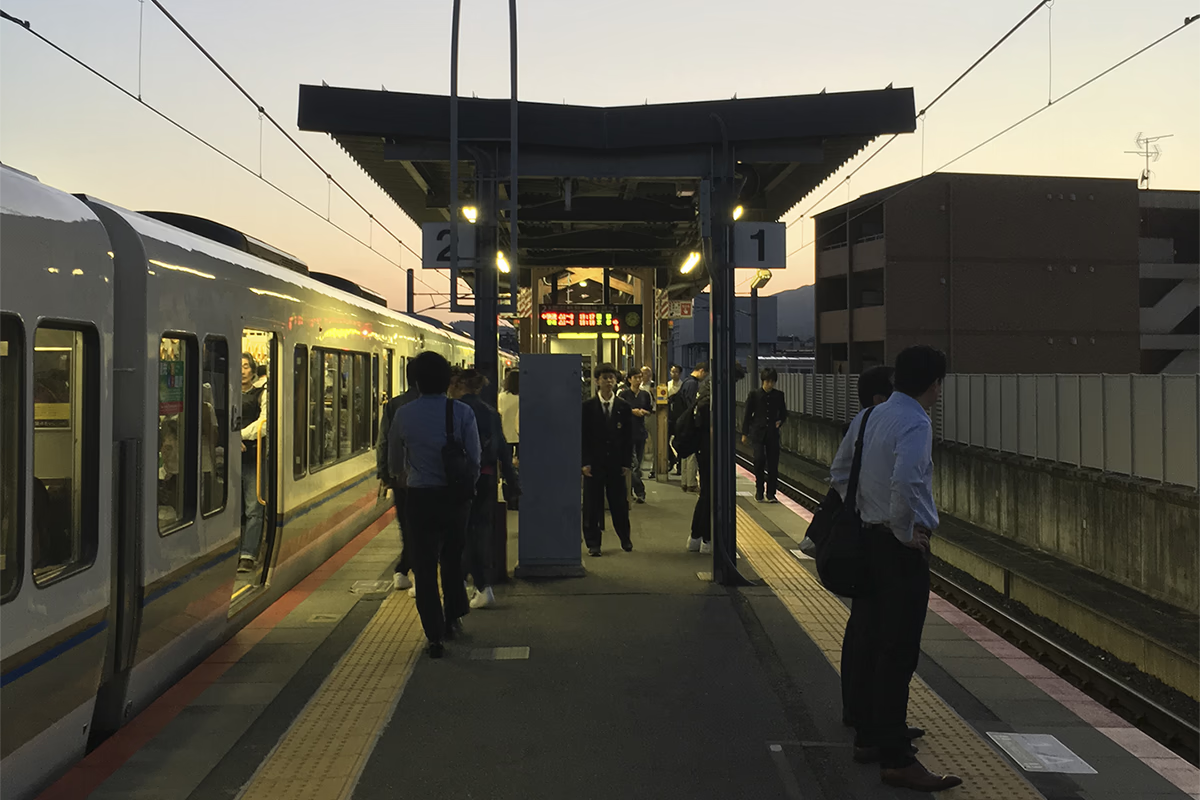
At their best, IC cards can be wonders of seamless transit and retail. That’s how the Octopus card integrates into daily life in Hong Kong — tap out from the gantry, stop by a convenience store and tap to pay for a bottle of water, stop by a bakery and tap to pay for bread, all before stepping out of the train station.
Or heed the lessons from the granddaddy of IC cards — Suica/Passmo. They work nationwide, even though each region rolled out their own eventually. Because the underlying technology is the same. They are incredibly durable, and can take a beating in one’s pocket. Mine are from 2014, and I’ve used them without a cover every time I’m back in Japan. They are still quite pristine, save for a few scratches.
South Korea’s T-money makes it fun. I bought mine from a train station’s vending machine in 2017, which is a guy’s idea of fun. My wife bought hers from the hotel’s 7–11 in 2023. She had a hard time choosing which card to get, because the different designs were all desirable. I could still use mine 6 years later without issue (the pandemic having scuppered our plan to visit in 2020), just had to top it up.
It’s the same for Taiwan’s EasyCard. And mine is the older version without a microchip that has since yellowed with age. It’s still valid.
Now contrast this with Singapore. In the years since I got my first East Asian transit IC card in 2012, we’ve gone through the EZ-Link/NETS FlashPay duopoly, the phasing out of NETS FlashPay, the change in backend protocol for EZ-Link to SimplyGo (stored value won’t be displayed at gantries when tapped), and the embarassing rollback to EZ-Link’s earlier backend protocol (stored value will be displayed at gantries when tapped). The authorities have had to “extend the usable lifespan” of the earlier system.
Then how is it that all the East Asian countries cited have kept their systems going without fuss?
In the meantime, one of my EZ-Link cards expired, the NETS FlashPay card I got as a replacement was phased out for public transport, which was subsequently walked back after public outcry, but not before I had already purchased a new EZ-Link card.
How many times do our transit policies and systems need to change? I’ll only start trusting it when my card can last a decade. Until then, the system hasn’t earned it.
Notes from Ben:
This Cultural Briefing was first observed in Jan 2024, and written in Dec 2025. Slight revisions were made in Apr 2026.
( CULTURAL BRIEFINGS )
Executive briefings on cultural matters
( SENSING PLACES )
Sensing cities as cultural barometers

不勞工作室
位于新加坡、意向東亞
Write to us at
hello@studioplough.com
We are a cultural intelligence practice
Cultivating brands with clarity