
( CULTURAL BRIEFING NO 11 )
Sacred and profane
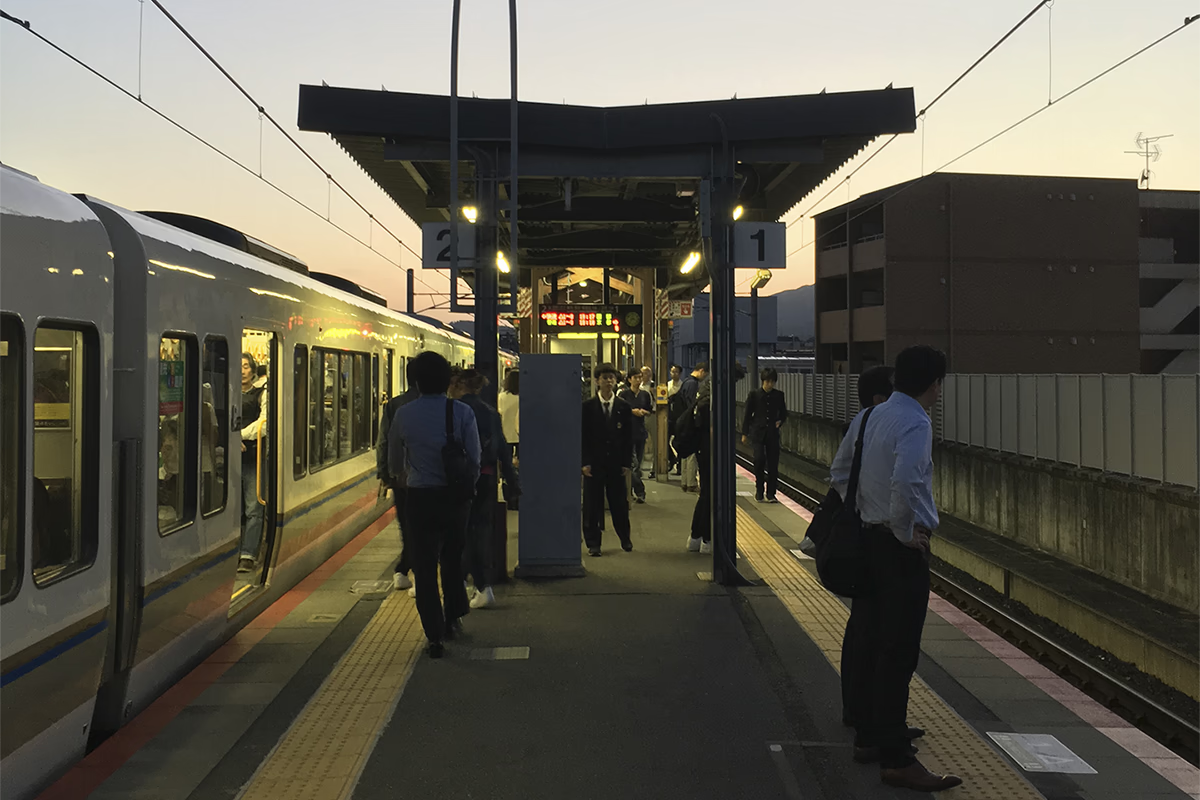
The wrongness of Harajuku Station’s new rear exit
_EN
I remember the first time exiting Harajuku’s original station — built in wood with a cockerel wind vane on the sloping rooftop — trying to orient my whereabouts. It was my first time to Japan, and a pilgrimage to Meiji Jingu seemed appropriate.
Upon noticing the Meiji-jingumae Station exit to the right, being separate from the Yamanote Line’s exit back then, I instinctively started walking in that direction.
Around the gentle upslope bend after it comes a clearing. Then it hits you: a gigantic torii marking the start of the forest trail to the shrine — with its tall trees, gentle rustling leaves, pale sunlight, inviting cool air, and hushed atmosphere.
Which is why, I was shocked upon returning after the Covid-19 pandemic. In place of the wooden structure stood a modern glass and metal construct. And a new station exit at the rear that violates the old ceremonial approach, leading one nearly right outside the entrance torii. The threshold between the sacred and profane was now closer than ever.
I can understand the need to provide ease of elevator access to the elderly and needy in Japan’s aging society. And since the station was being modernised anyway, a new stairway next to the elevator made perfect sense.
But there’s a Chinese and Japanese term that describes my lament perfectly: 儀式感 or gishiki-kan. The distance mattered. It was a rite of passage. That is now lost.
Notes from Ben:
This Cultural Briefing was first observed in May 2025, and written in Feb 2026. Slight revisions were made in Apr 2026.
( CULTURAL BRIEFINGS )
Executive briefings on cultural matters
( SENSING PLACES )
Sensing cities as cultural barometers

不勞工作室
位于新加坡、意向東亞
Write to us at
hello@studioplough.com
We are a cultural intelligence practice
Cultivating brands with clarity