
( CULTURAL BRIEFING NO 09 )
Absence of the human touch
The flattening of culture in Japan
_EN
There is no denying that Japan is a country with one foot still firmly stuck in the 20th century, and the other being reluctantly dragged into the 21st.
Take the traditional ramen-ya. They have been using paper meal tickets dispensed by machines for ages. It was a smart way to save on manpower when they were first introduced, making the entire process of ordering one’s ramen much more efficient.
But there haven’t been any serious attempts to improve the system since — customers still have to pay by cash in 2025. And if their denomination is too big for the ordering machine, the shop owner has to personally exchange it for smaller notes, making it a rare opportunity for small talk.
It’s as if Japanese society collectively heaved a sigh of relief after rapidly rebuilding between the 1950s to the 1980s, that life was already good enough — and entered a sort of stasis after the bursting of the economic bubble.
But this is also one of the beautiful things about the country. If things work, they keep working for a long time. So much so that when they are replaced, the sense of loss can be much more acute.
I felt this very deeply on my first visit to Tokyo Skytree. Everything was much bigger, and newer than Tokyo Tower. But the moment I entered the lift that would take us up to the observation deck, I noticed the missing lift lady. She had been replaced by a large digital display above the doors, with sweeping CGI imagery and an English voice-over.
The lift lady’s role at Tokyo Tower is more than symbolic. She’s the cultural representative of Japan, and when her well-timed commentary begins as the lift goes up from the ticketing concourse, and ends right as the lift opens to the observation deck, one senses the impeccable pride that she takes in her job.
I can understand why Japan has to change. It is grappling with huge gaps in manpower — the country’s demographic issues are well-known by now. This is especially noticeable in the service industry, which is also the most obvious target for automation and modernisation.
So once again, Japan finds itself at the forefront, showing the rest of the world how it delicately navigates between keeping up with the times, and retaining its soul. I hope it succeeds.
Notes from Ben:
This Cultural Briefing was first observed in May 2025, and written in Nov 2025. Slight revisions were made in Feb 2026.
( CULTURAL BRIEFINGS )
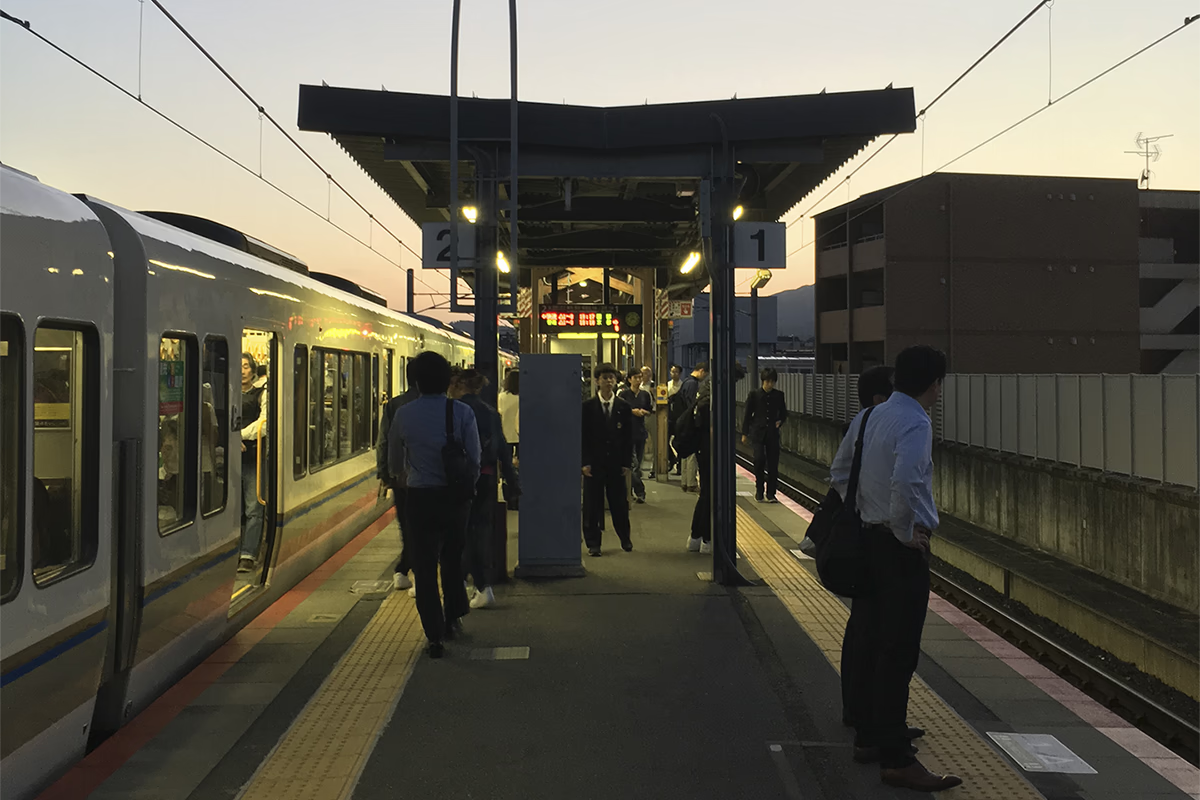
Executive briefings on cultural matters
( SENSING PLACES )
Sensing cities as cultural barometers

不勞工作室
位于新加坡、意向東亞
Write to us at
hello@studioplough.com
We are a cultural intelligence practice
Cultivating brands with clarity