
( CULTURAL BRIEFING NO 01 )
Cultural intelligence and branding as I understand it
( 01 ) OPENING NOTES
The previous iteration of Studio Plough’s opening brief focused on cultural differences across Asia. But I realised that such a specific angle is a myopic take on the lens with which I see and understand the world. It has therefore been retracted, after being published on the website for half a year. What was to be a replacement briefing (typically between 200–500 words) evolved to become a fundamental rewrite that is quite a bit longer than I had anticipated.
So what is cultural intelligence to me, and how does it illuminate the work of branding? It is about understanding the contexts and nuances of how people live, work, and play. It is in the ways that they move, organise, and express themselves. And how businesses and their brands can situate and orientate themselves in such a cultural environment of their own choosing.
I believe the nature of this subject matter demands an overview with more breadth and a certain amount of depth. One where I don’t just highlight the differences, but also share how people get into it, why I have chosen to call it as such, what holds brands back, accentuate the affinities, and lay bare the cultural timescales. Let’s dig in.
( 02 ) ON PERSONAL EXPERIENCE
In my mapping of this field, I have had the opportunity to connect with practitioners who came by way of anthropology, cultural studies, and sociology. This is, in my opinion, the academically straightforward path to cultural intelligence. Real life though is never so clean cut. The field’s practitioners are almost always individuals who live and thrive at the intersections.
Less conventional backgrounds include those from marketing, public relations, and communications, who grew into it through campaign after campaign. Then there are those who, by virtue of being cultural nomads, are uniquely suited to pinpointing gaps and harnessing points of entry from an outsider-insider perspective.
There are also agency folks who kept swimming upstream from graphic design. But instead of making the leap into creative direction, branched towards brand strategy instead. My journey is similar to this, though my foundation in the humanities prior to attending art college makes me a bit of an outlier.
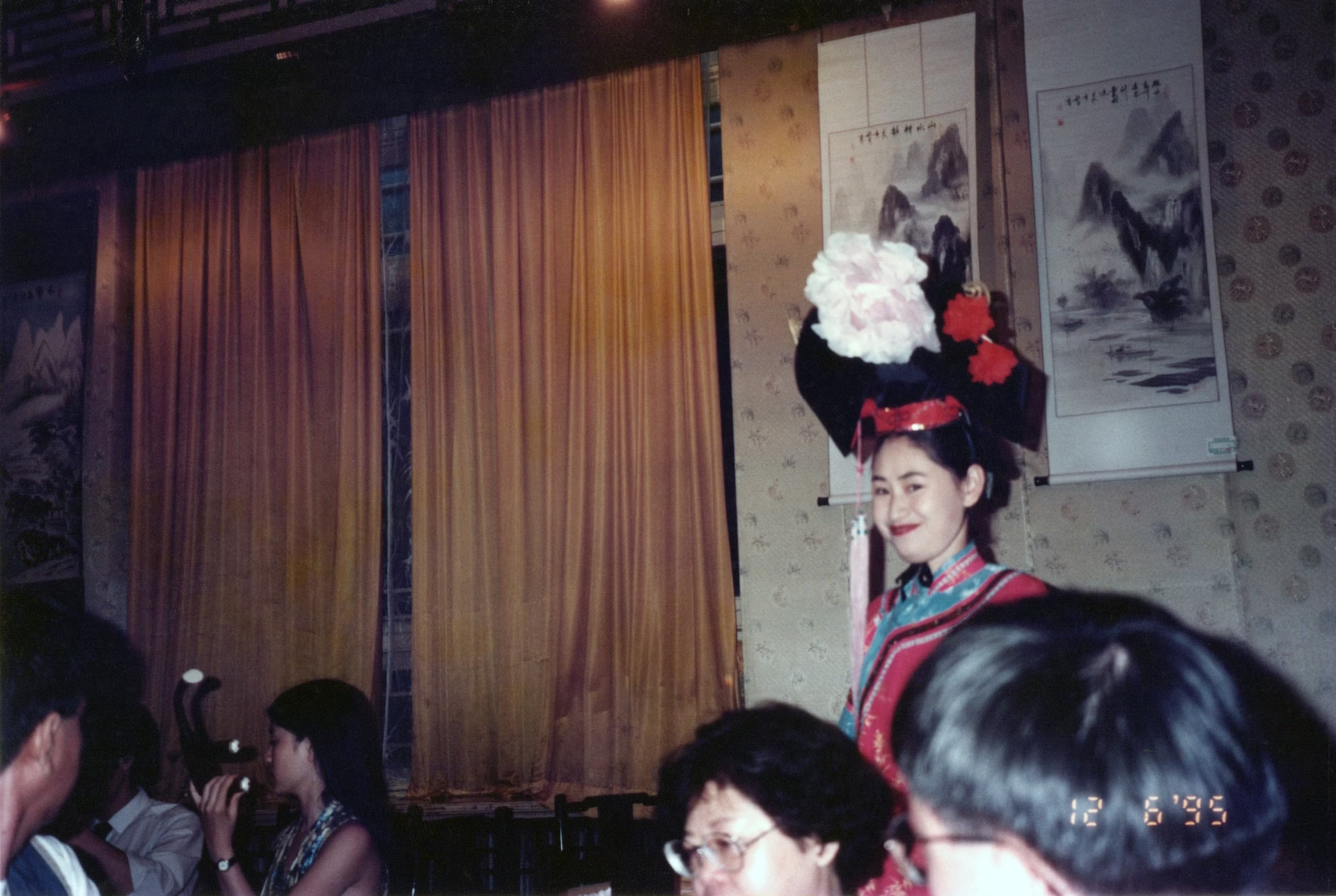
I have always been fascinated with culture, especially in association to my ethnicity. Hence, the suggestion to go to Beijing instead of Gold Coast for a family trip in 1995. Subsisting on a media diet of Hong Kong cinema, Taiwanese 瓊瑤 dramas, TVB wuxia serials, Japanese terebi dorama and anime since childhood — Hallyu came much later — explains the exposure and East Asia leanings as well.
As one can surmise, there are many routes to becoming a practitioner in the cultural intelligence space, and there isn’t a single way that is more ‘correct’ or ‘better’ than another.
( 03 ) ON TERMS USED TO DESCRIBE THIS TYPE OF WORK
This brings us to the terms used to describe this type of work, which I coin Brand Sensing. It involves reading culture at large, then understanding and interpreting it to help brands — never to control or weaponise, but to engage more sensitively and intelligently. Practitioners have either come straight from academia, management consultancy-side, creative agency-side, public relations and communications-side, or client-side. Also, the nature of their prior jobs can span from strategy, which is relatively slower, to the modern function of marketing, which has turned algorithmic.
Because the way it is understood is different, the way it is practiced differs as well. Descriptors of the field can include cultural translation, cultural theory, cultural strategy, corporate anthropology, semiotics, trend forecasting, market research, cultural sense-making, relevance strategy, ontological futurism, etc. Job titles that are applicable include cultural translator, cultural theorist, cultural strategist, corporate anthropologist, semiotician, trend forecaster, market researcher, cultural sense-maker, relevance strategist, ontological futurist, etc.
Culture, however, shouldn’t be captured on dashboards. It must be lived. This is why I have eschewed characterisations that suggest a fetish for data or quantitative slant to the work, finally deciding on Studio Plough being a cultural intelligence practice. And since brands sit within culture, it is only sensible that sense-making is work that precedes brand strategy. Not after. The sequence matters, as strategies have to adapt, while a brand’s essence must remain inviolate.
A sequence of this essay’s movements
( YOU’VE READ 699 WORDS OUT OF 3,264 WORDS )
( 04 ) ON STRUCTURAL ISSUES
Over time, I have come to realise that there are foundational issues that can neither be solved by brand strategy alone, nor by executing better visual design and marketing campaigns. Here’s a corporate structure that I encountered in 2026: an organisation separately appoints a Global Head in the USA, a Head of UK, and a Head of Canada; but somehow has a Head of India, MENA & SEA — overseeing three geographically and culturally distinct regions altogether. This makes little sense.
There are certainly extremely talented individuals out there, but regional dynamics take a lifetime to master. One only needs to look at how difficult it has been for the likes of Lazada and Shopee to entrench themselves in Southeast Asia. So much so that newer entrants like TikTok Shop and Pinduoduo can shake up the status quo. Of course, not all business conditions are as tough as the e-commerce arena right now, and the reasons for a lack of platform loyalty are myriad. But if you have one person making the call for three regions, the organisation is only taking one of them seriously.
Government policies, ownership structures, governance, rental overheads, interpersonal relationships, and prevailing cultural landscapes can be the prime determinants of long-term success or failure for a business.
Again, creative output cannot patch over structural flaws. This is why, in order to truly help businesses navigate the long arc, I have consciously chosen to focus on the fundamentals.
( 05 ) ON IMPOSITIONS
Another denouement from my time in the industry is my discomfort with the agency-style brand strategy process. This shift has its genesis in the late 1980s–1990s, as the big brand agencies started to adopt management consultancy-style practices. It was meant to help professionalise the industry, making the work compartmentalised and repeatable for billing. But I find that scoping a round of individual interviews with leadership, and conducting a brand discovery workshop, is too compressed to truly peel back the layers of a brand. Even if this were to be complemented with a couple of focus groups with different ‘target audiences’ after that.
There tends to be an element of performance and selective bias in workshops and focus group; whereas the segmentation of target audiences at this stage of the branding process is still early. Doing so tends to mean that the consultants involved already have the shape of the brand in mind. Competitor comparisons and the resultant positioning further reinforce this false shape. Any brand purpose and values that comes out of such an exercise has only scratched the surface. Building a brand’s verbal and visual identity on shaky foundations means costly corrections — both in terms of time and money — down the line. It is folly.
This is why I advocate slowing down at the beginning. Rushing the process of unfolding means imposing our assumptions and prematurely influencing a brand that is revealing itself. We shouldn’t. The birth (or rebirth) of a brand is not supposed to be proof of hypothesis.
( 06 ) ON THE INADEQUACY OF THE WORD ‘CULTURE’
What are the shortcomings of the word ‘culture’ in English? For starters, the word by itself is too vague and can mean different things depending on the context. I often find myself having to guess. Are we referring to fast-moving popular culture, by which we really mean trends. Or perhaps we are referring to the collective culture of a people, by which we really mean civilisation. Compare this to the clarity of their equivalent terms in Chinese, which are 潮流 and 文化 respectively.
This is why it is better to append the word ‘culture’ with an adjective when writing in English. It clears any doubt.
( 07 ) ON CULTURAL DIFFERENCES
Cities are cultural spheres of their own. What works in Shanghai does not automatically translate to Beijing, and vice versa — let alone across civilisations. Incidentally, China is the perfect example that illustrates why it ought to be ‘civilisation’ instead of ‘country’. Within its borders live the Han Chinese, Mongolians, Manchurians, Tibetans, Ugyhurs, and more.
I recall an ex-colleague who, during a Chinese snack giant’s rebrand exercise, asked how I stocked up on snacks back in Singapore. My reply to her was that I didn’t, because there are two 24-hour supermarkets within a 5-minute walking radius at my parents’ place (I lived with them until I got married and moved out, which is a Singaporean norm).
When access is this physically ubiquitous nationwide, online platforms can be put off until consumption habits start to change — slowly at first, then drastically. This explains China’s robust and mature e-commerce ecosystem, compared to Singapore’s smattering of platforms which only started developing much later.
The same can be said of e-payments. While Hong Kong, Singapore, and South Korea already had high adoption of credit cards by the 2000s, China skipped them entirely and built on e-payments through the internet and smartphone instead. Japan, meanwhile, is still rather cash-centric, although that is slowly changing as well.
But yes, it was ridiculously liberating to travel domestically without a wallet when I was working in China — provided one does not lose their smartphone.
( 08 ) ON CULTURAL AFFINITIES
It is not entirely useful to dwell only on our differences. Businesses should not diversify into new markets by emphasising what makes them different. This is the classic agency-centric belief in brand differentiation, taken too literally.
Instead, they should look at what are the commonalities with a brand’s native culture that can be transposed — in the musical sense — without losing its sense of self. Kindred things like rituals, deep-seated beliefs, festivities, culinary tastes, cultural preferences, language, etc. Or even emotions, which are universal. These are connections that people are naturally predisposed to make, which then creates a shared sense of belonging.
East Asia is more alike than any of the civilisations in the region would care to admit. Besides having highly homogenous populations, many of them even share a common written linguistic base in the past that still affects how their people think and express themselves today. Remember, cultural affinities are the ties that bind.
A sequence of this essay’s movements
( YOU’VE READ 1,704 WORDS OUT OF 3,264 WORDS )
( 09 ) ON LINGUISTIC NUANCES
An estimated 35%–60% of both Korean and Japanese vocabularies are of Chinese origin. It is, quite literally, woven into the fabric of everyday conversation.
However, as the spoken languages of both civilisations developed prior to their adoption of hanjaeo and kango respectively for writing, not everything was accepted wholesale. An example in Japanese would be jyonetsu, or 情熱. The arrangement of characters is in reverse order from its Chinese equivalent. This is simply the language’s and culture’s logic reasserting itself.
There are also unique terms that simply cannot be translated without losing a part of their meaning — like how fun’iki 雰囲気 in Japanese, fen’wei 氛圍 in Chinese, and cultural atmosphere in English are analogues of one another, and not interchangeable replacements. I often choose to leave these multilingual examples intact. It enriches the cultural interpretation.
Then we have what are considered dialects in today’s context, but are really linguistic descendants of Chinese that evolved into distinct branches through migration over time. The oldest layers of Hokkien (Southern Min), or 閩南語/福建話, have been tracked with enough scholastic veracity to be remnants of late Old Chinese and early Middle Chinese, spanning from the Zhou to Han dynasties. And Cantonese, or 粵語/廣東話, has been traced to be of Middle Chinese-descent from the Tang and Song dynasties.
Furthermore, another ex-colleague who is from Hong Kong once told me that Cantonese is written in Standard Chinese in schools. Meaning, the spoken version of the dialect differs from how it is formally written. Thankfully, colloquial Cantonese is very much in use and kept alive on digital platforms today.
These dialects retain words, phrases, and tonal pronunciations that are no longer used in modern Chinese. They also bear a surprising amount of resemblance to Korean and Japanese. Take 學生, or pupil, for example. It is read as hak’seng in Hokkien, hok’sang in Cantonese, hak’saeng in Korean, and gaku’sei in Japanese. Yet it is xue’sheng in Mandarin!
All of this is to say that the Chinese language’s outsized influence in East Asia cannot be understated. And knowing it is key to unlocking a pretty deep layer of linguistic and cultural understanding that makes the region so much more intelligible.
( 10 ) ON THE CULTURAL LOGIC OF SPACES
Much of a civilisation’s cultural logic can be gleaned from the way it builds and interacts with the physical world. For example, is there reverence for nature? Do they try to live with it, or do their darnedest to master it?
Do their cities cater more towards driving, taking public transport, walking, or strike a good balance? What are the inter-city connections — by road, by rail, by boat, or by plane? Are daily necessities within walking distance from home?
How developed is the metro or subway within a city? Does it reach the outskirts and suburbs? Are there alternative train lines in case of breakdowns? Are there enough bus routes for long haul and last mile connections? Are the transit card options easy and useful for commuters?
How wide are the pavements? Do pedestrians have to negotiate the same space with bicycles, and increasingly, e-scooters and motorised mobility aids? Or do they have peace of mind while they walk?
Are contiguous segments of highway and elevated train track viaducts built with concrete, a mixture of steel and concrete, or all-steel structures? Hulking overhead infrastructure can absolutely feel oppressive, especially if they are low and overbearing on the streetscape.
What is the most common type of housing typology? How widely or compactly are apartment blocks spaced apart? And how high do they go? Are the interstitial spaces in-between filled with greenery, or paved with concrete as well? Are they designed in such a way that individual apartments all get to enjoy enough sunlight, or are they insular and enclosed in a sky well of sorts, blocking out daylight from the lower levels?
What do the road, train station, and airport signs look like? What does the advertising in train stations and inside the trains look like? Do they strike a good balance between ease of wayfinding and commerce for people who are commuting?
Are heritage buildings conserved? Are places of worship open to the public, or do they solicit entrance fees? What building materials do they gravitate towards — brick, glass, wood, concrete, tile, or steel? They can either be used to delightful or drab effect.
Is there living space for people to... simply be? Or have all the rough edges been smoothed and optimised? Life, as I understand it, requires a bit of spontaneity and friction.
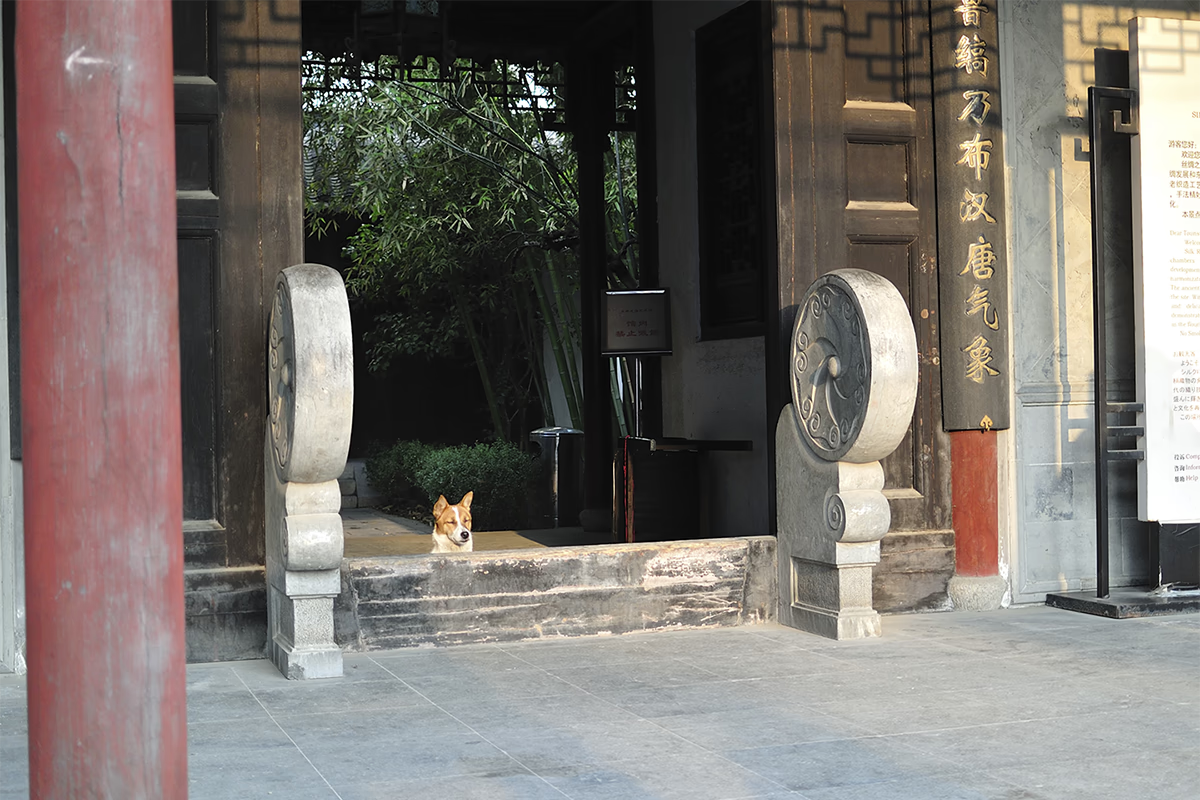
These are some of the recurring questions that I keep asking. It is what drives me to continuously document lived environments across East Asia. They are cultural barometers. Every city and district has its own pulse.

( 11 ) ON THE VARIOUS TEMPORAL NATURES OF CULTURE
The biggest misunderstanding arising from any brand work that involves culture, is when the timescale is not established. Culture is never self-sustaining. It is in constant negotiation with enough people who hold the line, and enough people who push the boundaries. And it has four distinct temporal natures:
- Civilisational culture that accumulates and drifts slowly over eras;
- Popular culture that shifts as brands try to ride and stay on trends;
- Cultural zeitgeists that captivate and galvanise a certain mass or segment of the populace; and
- Culture shocks that rupture, reverberate, and cause shockwaves far from their place of origin.
Together, they encompass what I have come to call ‘culture at large’. Perhaps owing to my nature and temperament, Studio Plough’s practice of cultural intelligence is everything but fast-moving culture. I find that trying to stay on top of trends is an exercise in futility. The best brands — the ones who are self-assured and truly know what they stand for — are the ones who set them.
A brand’s internal culture (also known as corporate or workplace culture) is a separate matter altogether. Navigating and aligning both culture at large and internal culture in tandem to withstand the test of time, is what I do as a sense-maker.
But above all, the greatest temporal upset today is the fracturing of collective cultural memory into individualism. Globally, culture is converging and homogenising — with the effect being that civilisations are no longer as distinct as they used to be. These are the societal phenomena field practitioners like us keep watch over.
( 12 ) ON BRAND CHARACTER, CONTINUITY, AND TIME
When I finally sat down to define my version of what a brand is, and what really matters for it to continue to exist, I reached the conclusion that ‘brand consistency’ is wrong.
So what is a brand? It is an entity through which consumers exchange their money for a good or service that is of personal value to them. This value could be purpose, utility, aspiration, nostalgia, or a combination thereof. I think of and understand a brand as a character out of a storybook (or a drama series, if we want to be more modern). And like a character, a brand needs to have a reason for its existence. When the reason rings true, it sets an unshakeable foundation.
This reminds me of a question that I once asked yet another ex-colleague. She told me very candidly that it took a long and arduous journey to discover her dress sense as she grew up. Much like how a vessel wears and leather develops patina, a brand’s idiosyncracies and natural disposition matures over time with an identity that gains depth and vitality, becoming increasingly coherent and recognisable. A character’s coming of age, so to speak.
Which is why I see ‘consistency’ as a mistake that has been perpetuated by the industry and parroted by all sorts for ages. Consistency implies staying unchanged. That is contradictory and incongruent to growing and evolving, which all brands do. And when a brand continues to stay true to its character, it starts to gain continuity. If it keeps violating its character, the consumer will choose to leave because they can no longer identify with the brand.
Not every founder or intergenerational custodian has such a clear inner compass of their brand character like Nintendo — making seemingly impossible leaps from starting out as a playing cards company, to ignoring the hardware race by focusing on pure, visceral play with the Wii, and even designing their own theme parks. The whole point of branding to me is to have the stillness while seeking for this deep-rooted belief, then stewarding a brand together as it lives through its character arcs.
( 13 ) CLOSING NOTES
This essay is by no means exhaustive. But it sets the groundwork for most of the thinking and considerations involved with Brand Sensing. The practice’s inside-out approach to cultural intelligence work is a condensed expression of all that I have learnt, experienced, and continue to accrue.
It has been a privilege to share with you the way I believe branding can and should be done. May your brands live long and prosper. And may our paths cross again when they do.
Writing notes from Ben:
This Cultural Briefing is a distillation of thoughts, observations, and learnings made since the 1990s. It was written and edited throughout Sep 2026.
( CULTURAL BRIEFINGS )

Executive briefings on cultural matters
( SENSING PLACES )
Sensing cities as cultural barometers

不勞工作室
位于新加坡、意向東亞
Write to us at
hello@studioplough.com
We are a cultural intelligence practice
Cultivating brands with clarity